What to Eat Before a Very Early Cycling Start
Gabriel Ricce
Lamorinda MBO Racing · USA Cycling Coach Level 3
Rolling out before sunrise means starting with low liver glycogen after an overnight fast. A small, targeted pre-dawn meal + top-off + hydration protects pacing, keeps perceived effort steady, and cuts GI risk. Keep it simple: familiar low-fiber, low-fat carbs 2–3 hours out, a fast-carb top-off 15–30 minutes pre-start, and sodium-containing fluids sipped, not chugged.
Why pre-dawn fueling matters for cyclists
Rolling out before sunrise means you're starting with low liver glycogen after an overnight fast. That matters. Your brain and working muscles depend on steady glucose to keep cadence smooth, decisions sharp, and perceived effort stable. Without a small, targeted intake, you're more likely to feel flat in the first 30–60 minutes and overreach early to compensate.
Pre-dawn fueling also protects pacing. Early surges on cold legs burn through limited carbohydrate faster, pushing you toward premature fatigue. A light, carb-forward snack tops off liver stores, jump-starts gastrointestinal motility, and sets up better carbohydrate oxidation once you're on the bike. That translates to more consistent power and easier heart-rate control as the ride unfolds. For a practical breakdown of why timing and carb choices matter, see cycling fueling strategy.
Temperature and hydration complicate early starts. Cool air can mask thirst, and caffeine on an empty stomach can feel edgy. Pairing carbs with a bit of fluid and sodium supports gut comfort and maintains blood volume, which helps keep oxygen delivery and thermoregulation on track as the day warms.
Finally, pre-dawn fueling is about gut training. Rehearsing a small, repeatable routine teaches your GI tract to tolerate carbs when it's least enthusiastic. That pays off on race day when the clock dictates breakfast. Keep it simple, digestible, and time-tested so you can roll out confident, fueled, and ready to ride steady from the first mile.
Free: the Race Fueling Checklist
Turn this into a race-week plan: carbs, fluids, sodium, caffeine and aid-station prep in one free PDF you can print or keep on your phone.
Timing: 8–12h, 2–4h, and 30–60min windows
8–12 hours before. If your start is pre-dawn, this is your anchor meal — think early dinner or a late-evening mini-dinner. Aim for a familiar, carb-forward plate (about half to two-thirds carbs), moderate lean protein, and low fat/fiber to reduce gut burden. Examples: rice or potatoes with grilled chicken and a small portion of cooked veggies; pasta with light marinara and turkey; oatmeal with banana and a side of yogurt if you tolerate dairy. Salt the meal to support fluid retention overnight. Hydrate steadily (water or an electrolyte drink) and avoid alcohol. Finish eating at least two hours before bedtime to improve sleep quality and digestion.
2–4 hours before. This is your top-up meal. If you're waking at 2–3 a.m., keep it simple and repeatable. Target 1–2 g of carbs per kg body weight, minimal fat and fiber, and modest protein if you tolerate it. Options: white bagel with honey/jam, cream of rice or instant oats with maple syrup, rice cake stack with banana, or a small rice bowl. Sip 12–20 oz (350–600 ml) of a sodium-containing drink across this window. Caffeine can begin here if it's part of your routine — dose conservatively to avoid GI stress and jitters.
30–60 minutes before. This is the final primer. Choose fast carbs you trust: 15–40 g from a gel, chews, a small banana, or sports drink. Keep fluids coming with electrolytes — small, frequent sips rather than chugging. If you're prone to gut sloshing, stop heavy sipping 10–15 minutes pre-start. Optional: a small caffeine bump if you didn't dose earlier (stay within your usual total). Keep everything familiar — race day is not for experiments. For more details on pre-race meal timing and composition, check out what to eat before a bike race.
| Window | Carbs | Fluids | Sodium | Fat/fiber |
|---|---|---|---|---|
| 8–12 h | ~1–2 g/kg | 500 ml + water at meal | Salt with meal | Low–moderate |
| 2–4 h | 1–2 g/kg | 350–600 ml with electrolytes | 300–600 mg | Minimal |
| 30–60 min | 15–40 g fast carbs | Small sips | Optional | Avoid |
| 10–15 min | 20–30 g (gel/chew) | 4–8 oz | Optional | Avoid |
Macros that work: carbs front and center
When the alarm goes off before sunrise, prioritize carbohydrates. Glycogen stores dip overnight, and you'll tap them fast once you start moving. Aim for 1–4 g of carbohydrate per kilogram of body weight in the 1–4 hours pre-start, scaled to how much time your stomach has. If you only have 30–60 minutes, think smaller: 30–60 g of quick-digesting carbs.
Choose low-fiber, low-fat carb sources to speed gastric emptying and reduce gut risk: white toast with honey, a plain bagel, rice cakes with jam, instant oats, bananas, applesauce pouches, low-fiber cereal, or a sports drink. If you tolerate liquid calories better pre-dawn, combine a sports drink with a gel or soft chews. For a deeper dive into how much carbohydrate to target and practical intake strategies, see carbohydrates per hour for cycling.
Protein plays a supporting role. Include 10–20 g to curb hunger and help stabilize energy without slowing digestion. Examples: a scoop of whey in water, Greek yogurt if you tolerate dairy, or a small soy drink. Keep fat minimal (a teaspoon of nut butter is fine, not a tablespoon) and fiber modest (≤5 g) to reduce slosh and pit stops.
If you routinely train early, practice your macro mix on easier days. Note the timing that feels best: many athletes do well with 60–90 minutes between last bite and go-time; others handle a final top-off 15–20 minutes out (e.g., a banana or gel).
Caffeine can help alertness and perceived effort. If you use it, 1–3 mg/kg total from coffee, tea, or caffeinated gels, started ~60 minutes before, then topped up lightly near the start if needed. Don't add it for the first time on race morning.
Quick-build plates:
- 60–90 min out: White bagel + honey (60–80 g carbs) + whey in water (15–20 g protein).
- 30 min out: Applesauce pouch + sports drink (40–60 g carbs).
- 10 min out: One gel with water (25–30 g carbs).
Keep it simple, familiar, and carb-forward.
Grab-and-go blueprints for pre-dawn rides
When the alarm hits 4:30 a.m., you need fuel that's fast, gentle on the gut, and easy to execute half-asleep. Use these plug-and-play combos based on your lead time.
60–75 minutes before roll-out (bigger top-up):
- Option A: Overnight oats (1/2 cup oats, milk of choice, honey or maple, pinch of salt) + banana + espresso. Add a tablespoon of peanut butter if you tolerate fat well.
- Option B: Rice bowl (1 cup cooked jasmine rice) with soy or a drizzle of maple, a few raisins, and a dash of cinnamon + 12–16 oz water.
- Option C: Plain bagel with jam + small yogurt (if dairy is friendly) + coffee or tea. Keep spreads light to moderate.
30–45 minutes before (lighter, higher GI):
- Option A: Two toaster waffles with honey or syrup + 12 oz sports drink.
- Option B: Applesauce pouch (3–4 oz) + one energy gel + water.
- Option C: White toast with jam + a few salty pretzels to nudge sodium.
15–20 minutes before (last-minute):
- Option A: One gel + a small banana + 8–12 oz water.
- Option B: One fig bar + 8–12 oz sports drink.
- Option C: A handful of gummy chews (20–30 g carbs) + water.
If you wake up not hungry: Sip a bottle of 4–6% carb sports drink right away, then top up with a gel 10–15 minutes before you start.
Sensitive stomach playbook: Favor low-fiber, low-fat, low-protein carbs. Swap bagels for white toast, oats for cream of rice, nut butters for jam or honey. Keep caffeine modest.
Hydration cues: Aim for 12–20 oz fluid in the hour pre-ride, adjusted for heat and body size. If you sweat heavily, add 300–600 mg sodium. Personalize your hydration using the cycling hydration calculator.
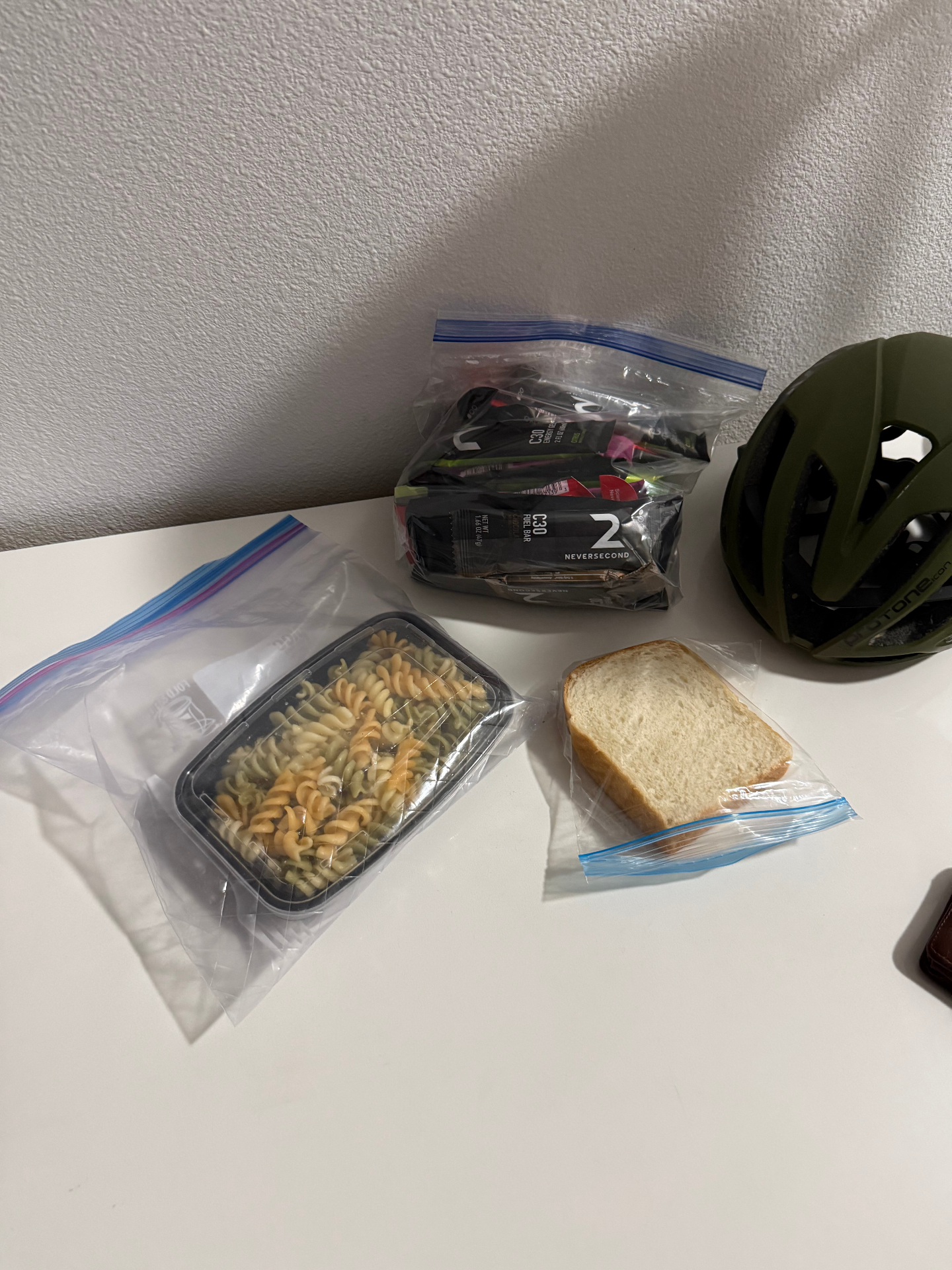
Prep shortcuts the night before: Portion carbs by grams (e.g., 40–60 g) in labeled bags. Pre-mix bottles. Set toaster, bowl, and utensils out. Place gels by your keys.
Make it repeatable: Log what you ate, timing, and how the first 60 minutes felt. Iterate until you have two weekday blueprints you can run without thinking. For more fueling examples, see how to fuel long bike rides.
When chewing feels impossible: liquid fueling
If solid food turns your stomach before a dawn start, shift to liquids that deliver carbs, sodium, and a bit of protein without chewing. Aim for 200–400 kcal in the 60–90 minutes pre-start, adjusting down as the start gets closer.
Simple play: mix 1–2 servings of a sports drink (30–60 g carbs, 300–600 mg sodium) and sip slowly. If you need more staying power, add a scoop of easily digested protein (10–15 g whey or rice protein) or pair with a low-fat drinkable yogurt. Keep fat and fiber minimal.
Blender options (keep volume modest to avoid slosh):
- Fast-start shake: 12–16 oz sports drink + 1 ripe banana + 1 tbsp maple syrup + pinch of salt.
- Gentle latte: 8–12 oz lactose-free milk or soy milk + instant coffee (optional) + 1 tbsp honey + ice. Skip coffee if you're sensitive.
- Tummy-easy mix: 12 oz electrolyte drink + 1 scoop maltodextrin or a carb mix; no fruit if nerves run high.
Can't stomach sweetness? Use a light broth (250–400 mg sodium per cup) with a small squeeze of rice syrup. Warm liquids can settle nerves in cold weather.
Test all mixes in training. Start sipping 30–45 minutes before go-time, finishing 10–15 minutes pre-start. If the event is long, keep the same liquid profile for the first 20–30 minutes until your gut wakes up. For more actionable fueling examples, refer to how to fuel long bike rides.
Gut comfort: reduce risk when the clock is brutal
Early alarms compress digestion, so aim for foods that empty fast and sit light. If you have 2–3 hours, a low-fiber, low-fat breakfast works: white toast or a plain bagel with a little honey or jam, a banana, and 12–20 oz (350–600 ml) of electrolyte drink. If you have under 90 minutes, switch to simpler carbs: applesauce pouch, sports drink, chews, or a small rice cake with jam. Skip high-fat spreads, roughage, and seeds.
Dose caffeine with intent. If you tolerate it, use 1–3 mg/kg total pre-start, but spread it: a small coffee or caffeinated gel 45–60 minutes out, then top up closer to go-time if needed. Avoid chugging a giant coffee on an empty stomach. If you're sensitive, go half-dose or decaf and rely on race-start caffeine.
Manage fluids without sloshing. Start sipping on waking and stop major intake 20–30 minutes before the start to allow a final restroom trip. Add sodium (300–600 mg/L) if you're a salty sweater; skip hyper-sweet drinks this early unless you've practiced. Personalize your approach with the cycling hydration calculator.
Use a mini gut-primer. 10–15 grams of quick carbs every 15–20 minutes in the final hour keeps GI transporters active and reduces shock at the gun.
Protect the gut lining. If you're NSAID-prone, avoid pre-start use; it increases GI risk. Practice your exact early-start menu on key sessions. If you struggle with reflux, elevate your torso when eating and favor non-acidic carbs.
Special scenarios: travel, altitude, extreme heat
Travel (time zones + unfamiliar food):
- Aim to land 48–72 hours before if possible. Lock meal timing to the destination clock on arrival to nudge circadian appetite.
- Pack known-safe staples for the early meal: instant oats, rice cakes, nut butter packets, banana, low-fiber bars, electrolyte powder. Avoid airport experiments.
- Hydrate on travel days: 500–750 ml per 2–3 hours of awake time, plus sodium if you're a salty sweater. Limit alcohol and high-fiber salads the night before an early start.
Altitude (2,000 m/6,500 ft and above):
- Expect reduced appetite and faster breathing — carb availability matters. Favor easy carbs in the last 12–18 hours: white rice, potatoes, low-fiber cereal, soft breads, sports drink.
- Pre-start meal (2–3 hours out if you can): 1–3 g/kg carbs, low fat/fiber, moderate protein. If nerves or altitude blunt intake, sip 30–45 g carbs/hour from a bottle (maltodextrin + sodium) in the final 2 hours.
- Increase sodium slightly; dry air accelerates fluid loss. Start well-hydrated: pale-yellow urine, not clear. The cycling hydration calculator can help you adjust your intake for altitude or heat.
Extreme heat (wet-bulb or forecast >80°F/27°C at start):
- Shift dinner earlier and lighter to improve sleep and gastric comfort. Emphasize carbs + sodium.
- Morning meal: low-residue, low-fat, moderate protein. Add 500–1,000 mg sodium in the 60–90 minutes pre-start via electrolyte drink or salt capsules if you're heat-adapted and tolerate it.
- Pre-cool while fueling: cold smoothie, ice slurry (6–8 oz), or chilled sports drink can sit better and reduce strain.
Execute a dress rehearsal. Replicate the exact menu, timing, and fluids in training at similar time/conditions at least twice. Log GI response, energy, and urine color to refine.
Pre-pack checklist and repeatable routine
Lock this in the night before so you can eat on autopilot at 3–4 a.m.
Your pre-pack checklist:
- Carb source (choose one): instant oats cup, two plain bagels, or two rice cakes + honey/jam
- Protein (optional, light): 6–8 oz low-fat yogurt or one hard-boiled egg
- Easy fructose hit: banana or applesauce pouch
- Electrolytes: pre-measured hydration mix or sodium capsules
- Caffeine (if used): coffee sachet or 100–200 mg caffeine gels/tablets
- Fats kept minimal: single-serving peanut butter or none
- Backup fuel: 1–2 gels or chews
- Utensils: spoon, shaker bottle, soft flask
- Water: two bottles filled (one plain, one with mix)
- Timing card: handwritten plan with timestamps (wake, sip, eat, top-up, last sip, out-the-door)
Your repeatable routine (example 90–120 min pre-start):
- Wake + 8–12 oz water with electrolytes.
- Light movement: 3–5 min mobility to wake the gut.
- Main carbs: 60–90 g carbs from your chosen option. Keep fiber low.
- Add fruit or applesauce for quick sugars (15–25 g carbs).
- Optional protein: small, easy portion if you tolerate it.
- Caffeine 45–60 min pre-start if you normally use it.
- Top-up 20–30 min pre-start: gel/chews (20–30 g carbs) + a few sips water.
- Bathroom window: plan 10–15 min before departure.
Pack it, stage it by the door, set alarms for each step. Same foods, same order, same timings — reduce decisions and protect your gut. For a practical approach to building repeatable fueling routines, see cycling fueling strategy.
Common mistakes to avoid
- Skipping fuel entirely. Waking at 3–4 a.m. and rolling straight into a session without calories risks low blood glucose, weak pacing, and higher perceived effort.
- Eating too much fiber or fat. Bran cereal, large salads, nut butters, or fried foods slow gastric emptying and can cause cramps or bathroom stops when the gun goes off.
- Trying new foods on race morning. Novel bars, gels, or "superfood" drinks are a gamble under stress. Test your early-start menu in training first.
- Overloading protein. Big omelets or shakes can feel heavy. Prioritize easy-to-digest carbs with a small protein bump only if you know it sits well.
- Chugging coffee last minute. A huge dose right before the start can spike urgency. If you use caffeine, time it 45–60 minutes ahead and sip water alongside.
- Ignoring timing. A small snack 15–30 minutes pre-start is fine, but a full meal needs 2–3 hours. Split feedings if you're up early.
- Neglecting fluids and sodium. Cool mornings still dehydrate. Include water and a light sodium source — don't overdo plain water. The cycling hydration calculator can help you dial in sodium and fluid needs.
- Forgetting backup options. Bring a tolerated bar, gel, or banana in case appetite or logistics change.
Sample mini-plans for different start times
2:30 a.m. start (wake at 12:45 a.m.):
- 12:45 a.m.: 16–20 oz water with electrolytes; optional coffee/tea. 1 small banana + 1 tbsp honey.
- 1:15 a.m.: Main pre-race meal: 1 cup cooked white rice + 1 scrambled egg + 1–2 tsp olive oil; sip 8–12 oz fluids.
- 2:00 a.m.: Top-off: applesauce pouch or half a sports bar. 4–8 oz fluids.
- 10–15 min pre-start: 1 gel or 8–12 oz sports drink.
4:00 a.m. start (wake at 2:15 a.m.):
- 2:15 a.m.: 16–20 oz water with electrolytes; coffee if you use caffeine. 1 banana or plain toast.
- 2:45 a.m.: Main pre-race meal: 1 bagel with jam + 6–8 oz yogurt (or tofu) for a light protein hit.
- 3:30 a.m.: Top-off: 1 chewy fruit snack or a small rice cake with honey. 6–8 oz fluids.
- 10–15 min pre-start: 1 gel or 8–12 oz sports drink.
5:30 a.m. start (wake at 3:45 a.m.):
- 3:45 a.m.: 16–20 oz electrolytes; coffee/tea as usual. 1 banana + small handful pretzels.
- 4:15 a.m.: Main pre-race meal: oatmeal made with water, topped with jam or maple syrup; optional 1 hard-boiled egg on the side.
- 5:00 a.m.: Top-off: half a sports bar or 1 applesauce pouch. 4–8 oz fluids.
- 10–15 min pre-start: 1 gel or 8–12 oz sports drink.
Guidelines to adapt:
- Aim 1–4 g carbohydrate per kg body weight across wake-to-start window; keep fat/fiber low.
- Keep protein light (10–20 g) to curb hunger without heaviness.
- Use familiar, low-fiber carbs: rice, bagel, oatmeal, applesauce, sports products.
- Hydrate early with electrolytes; then small sips. Urine should be pale, not clear. For more on hydration, see the cycling hydration calculator.
- If nerves limit solids, shift more carbs to liquids (sports drink) and gels.
Dial it in for your next early roll-out
Start with a simple template you can repeat in training: 2–3 hours pre-start, aim for 1–1.5 g of carbs per kg body weight, low fiber, low fat, moderate protein. Example: white rice or oats with banana and honey, plus a little yogurt or egg whites if you tolerate it.
If you can't stomach a full meal, go split-dose. Eat half 2–3 hours out, then top up 30–45 minutes before go-time with 20–30 g fast carbs: a gel, applesauce pouch, sports drink, or white toast with jam. This steadies blood sugar without gut overload.
Hydration matters more at dawn. Wake, sip 12–20 oz fluid over 30–45 minutes. If you sweat heavily or it's warm, include 300–500 mg sodium before you roll. Coffee is fine if it's routine — keep it consistent and pair with water. For a more detailed approach, use the cycling hydration calculator to dial in your fluid and sodium needs.
Test your plan on early training days. Log timing, foods, gut comfort, and energy. Keep what works; cut what doesn't. On race week, don't experiment — execute the practiced plan, adjust portions for nerves, and arrive fueled, calm, and ready.
Frequently asked questions
How early should I eat before a very early workout or race?
Aim for 2–3 hours if possible. If that's not realistic, split fueling: a small carb-focused meal 60–90 minutes before, plus a quick carb top-up (like a gel, banana, or sports drink) 10–15 minutes before the start.
What should the pre-start meal look like?
Prioritize easy-to-digest carbs (oats, rice, toast, rice cakes, bananas, applesauce) with a little protein (yogurt, egg whites) and minimal fat/fiber to reduce GI risk. Keep flavors familiar.
I can't stomach solid food at 4 a.m. — now what?
Go liquid. Try a carb-rich smoothie, meal-replacement shake, drinkable yogurt, or sports drink with a scoop of maltodextrin. Start sipping 60–90 minutes out.
Coffee or no coffee?
If you're accustomed to caffeine, yes — time it 45–60 minutes pre-start. Keep it moderate and pair with fluids. If you're not used to caffeine, race day isn't the time to experiment.
How much should I drink before the start?
Wake up and sip 8–16 oz (250–475 ml) over 60–90 minutes. Include sodium if you're a salty sweater or it's hot. Avoid chugging right before the gun.
What if my start is ultra-early and I need more carbs?
Use a "drip feed": 20–30 g carbs every 20–30 minutes from easily tolerated sources (sports drink, chews, gels) leading into the start.
Do I need to practice this?
Yes. Rehearse your exact foods, timing, and fluids on early long training days to dial tolerance and confidence.
What evidence-based guidelines support pre-dawn fueling (carbs, caffeine, sodium, and meal composition) for cyclists?
Established consensus statements recommend 1–4 g/kg carbohydrate in the 1–4 hours pre-event with low fiber and low fat to reduce GI load (IOC consensus; Burke et al., 2011; ACSM/AND/DC Position Stand, 2016). Caffeine intakes of ~1–3 mg/kg can enhance performance when timed 30–60 minutes pre-ride (IOC consensus; Jeukendrup & Spriet, 2014). Hydration practices generally target starting euhydrated with sodium-containing fluids; sodium needs vary by sweat rate and composition, guided by ACSM hydration statements (ACSM, 2007/2016).
Turn this strategy into a real plan.
FuelQ Pro builds personalized fueling for your training weeks, long sessions and races — plan, execute, review, improve.